Frontier science, explained
Space, physics and materials news from NASA, NIST, ESA/Hubble, ESA/Webb, ESO, NOIRLab and ALMA.
Cosmic Tug-of-War: Gravity Reshapes Magnetic Fields in Star Clusters
A record-breaking ALMA survey delivers the first statistical evidence that collapsing gas clouds realign their magnetic fields, tipping the cosmic balance in favor of gravity
astrophysicsstar clusters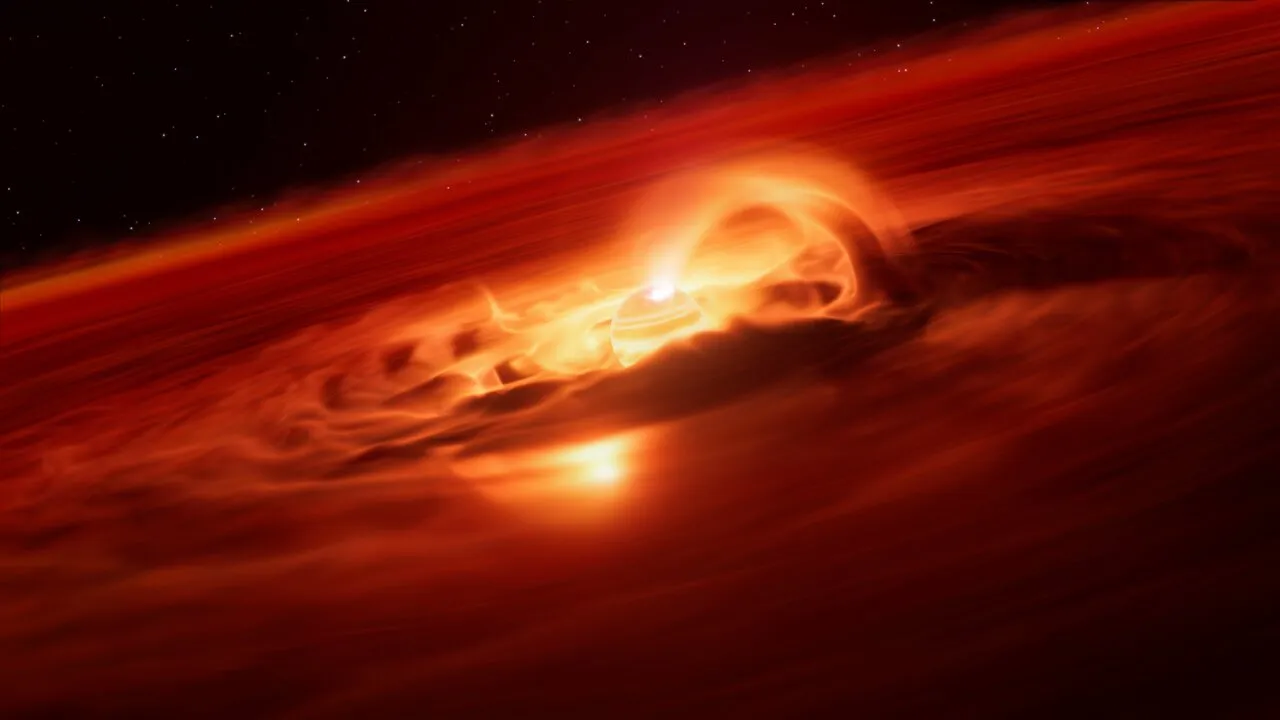
Six billion tonnes a second: Rogue planet found growing at record rate
Astronomers have identified an enormous ‘growth spurt’ in a so-called rogue planet.
astrophysicsexoplanetsALMA pinpoints the radio signature of planetary growth
New multi-frequency observations reveal that the growing giant planet PDS 70c shines in radio waves not from dust, but from ionized gas in its environment.
astrophysicsexoplanetsNIST Engineers Design 5 New Ways to Connect Concrete Pieces for More Resilient Buildings
One of the biggest challenges with precast concrete is connecting the concrete pieces at a job site.
materials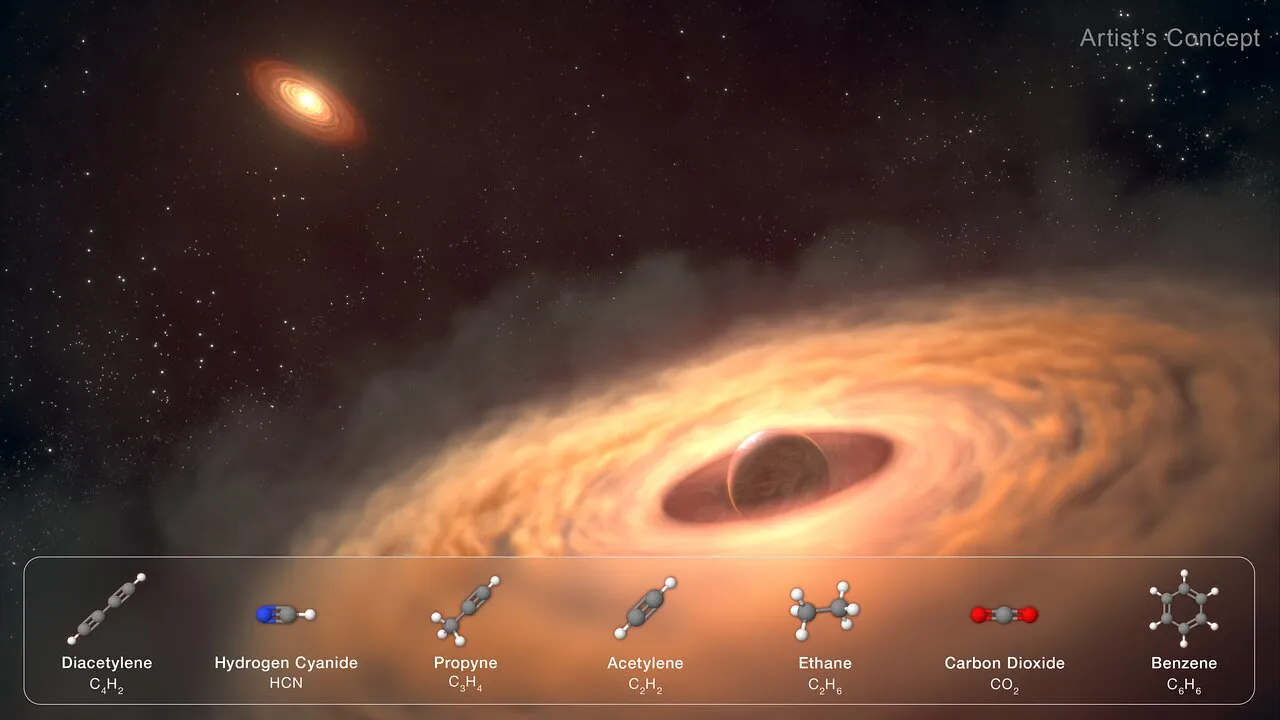
Webb studies moon-forming disc around massive planet
The disc offers insight into how the moons of solar system gas giants like Jupiter might have formed.
astrophysicsexoplanetsSpirals in Planet-Forming Disk Caught Twisting for the First Time with ALMA
Astronomers using the Atacama Large Millimeter/submillimeter Array (ALMA) have, for the first time, captured on video the winding motion of spiral structures in a planet-forming disk.
astrophysicsexoplanets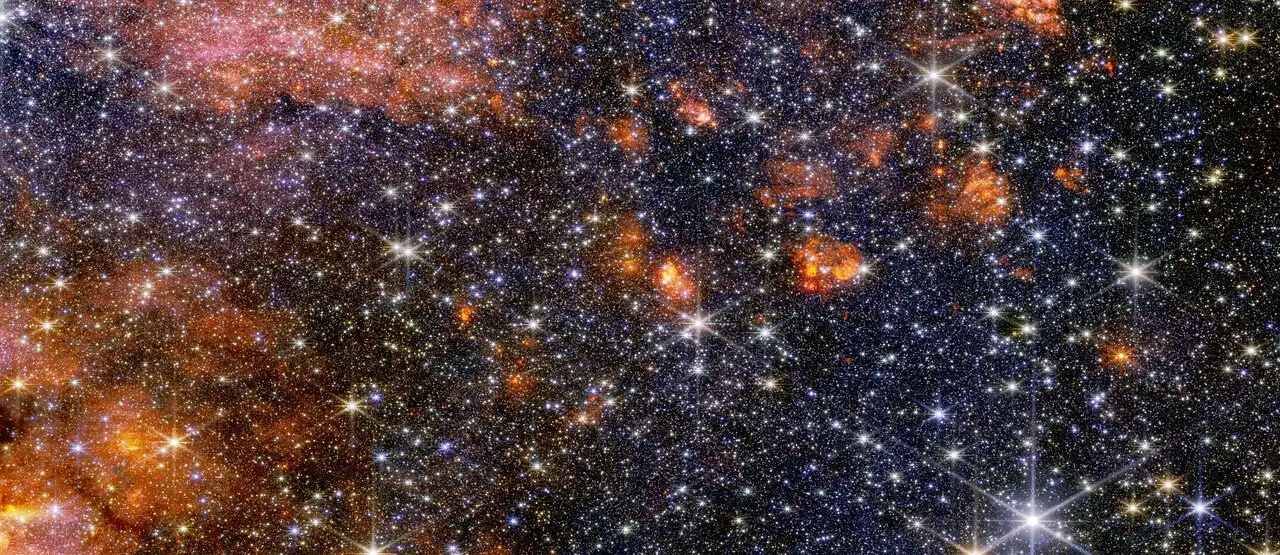
Webb explores largest star-forming cloud in the Milky Way
The NASA/ESA/CSA James Webb Space Telescope has revealed a colourful array of massive stars and glowing cosmic dust in the Sagittarius B2 (Sgr B2) molecular cloud, the most massive and active star-forming region in our Milky Way galaxy.
astrophysicsthe milky way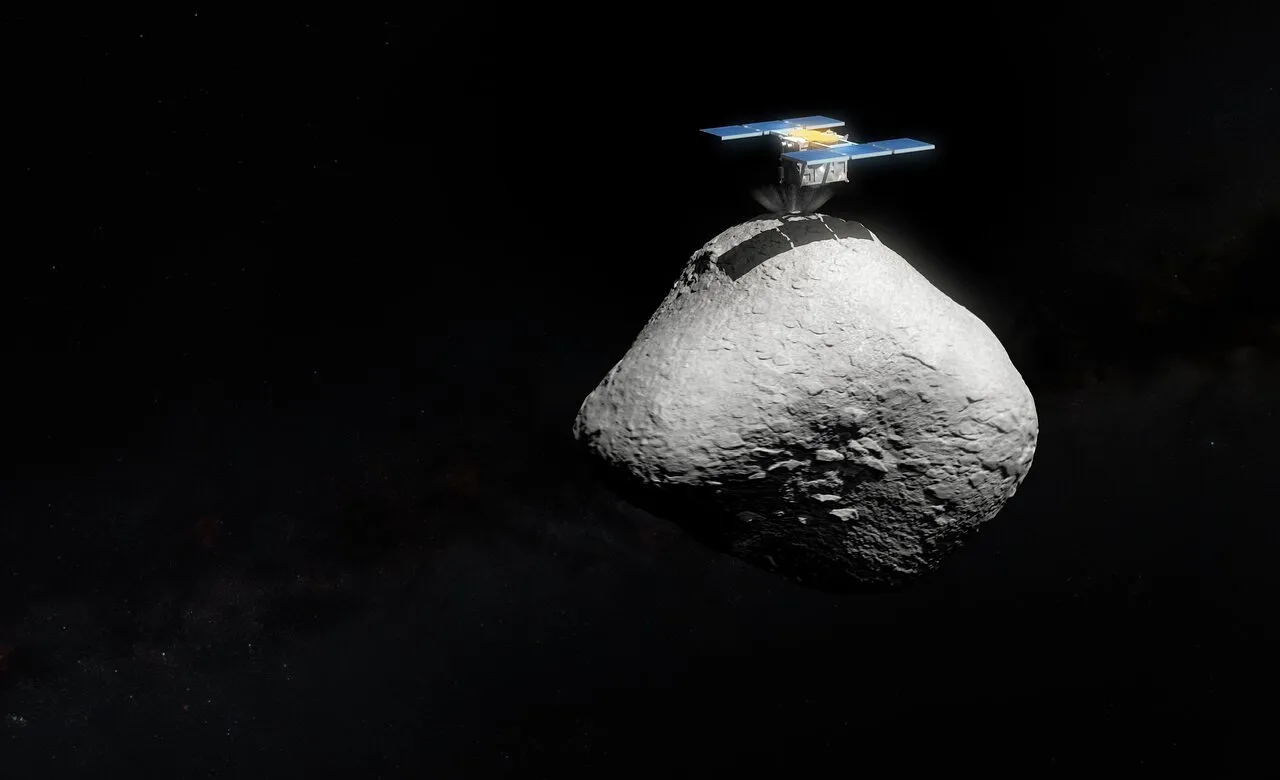
Can Hayabusa2 touchdown? New study reveals space mission’s target asteroid is tinier and faster than thought
Astronomers have used observatories around the world, including the European Southern Observatory’s Very Large Telescope (ESO’s VLT), to study the asteroid 1998 KY26, revealing it to be almost three times smaller and spinning much faster than previously thought.
astrophysicsthe solar system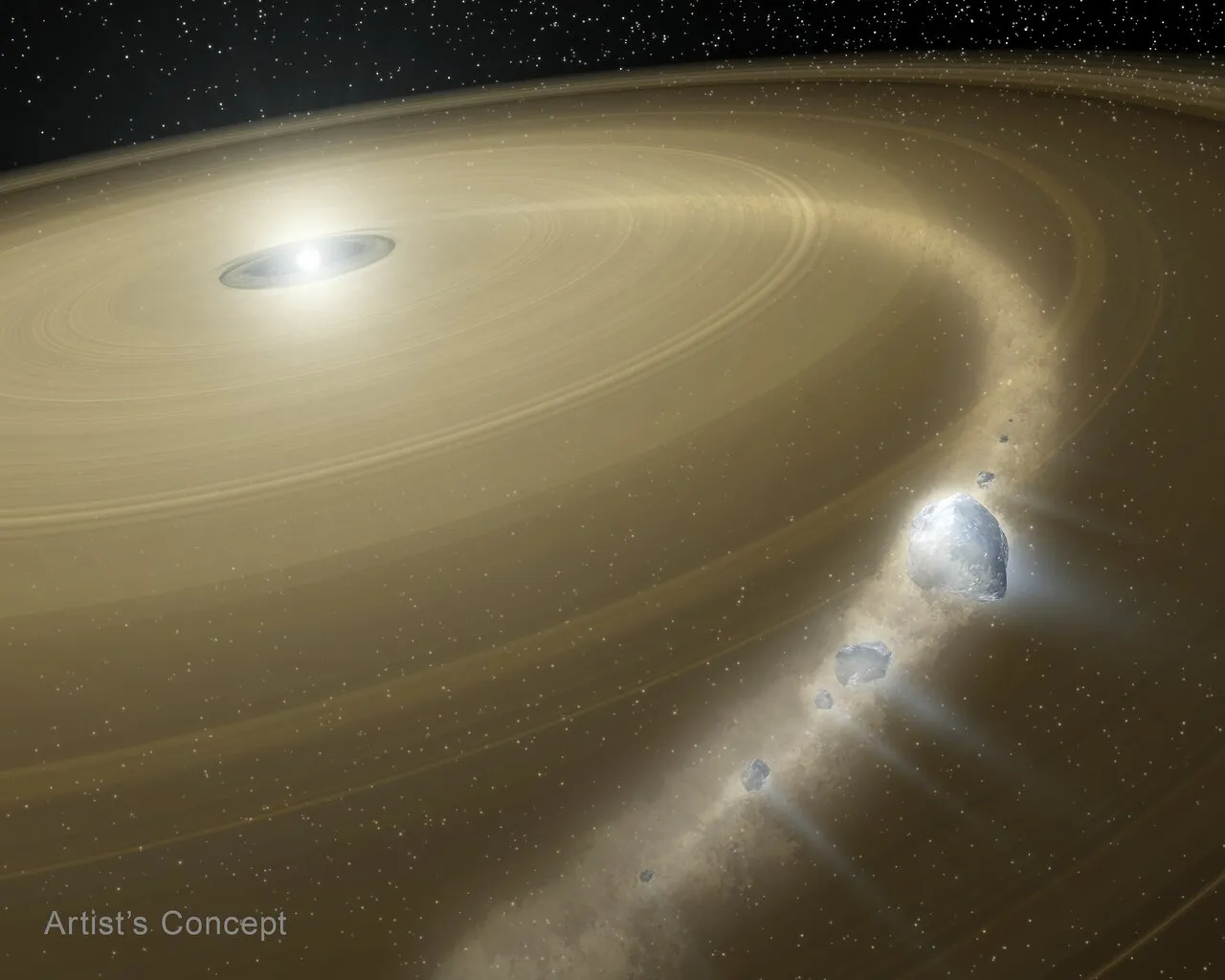
Hubble sees white dwarf eating piece of Pluto-like object
In our nearby stellar neighbourhood, a burned-out star is snacking on a fragment of a Pluto-like object.
astrophysicsthe solar systemAn Exceptional Einstein Cross Reveals Hidden Dark Matter
An international team of astronomers, including researchers from ALMA, has discovered a spectacular Einstein Cross in the distant universe that reveals the hidden presence of dark matter.
astrophysics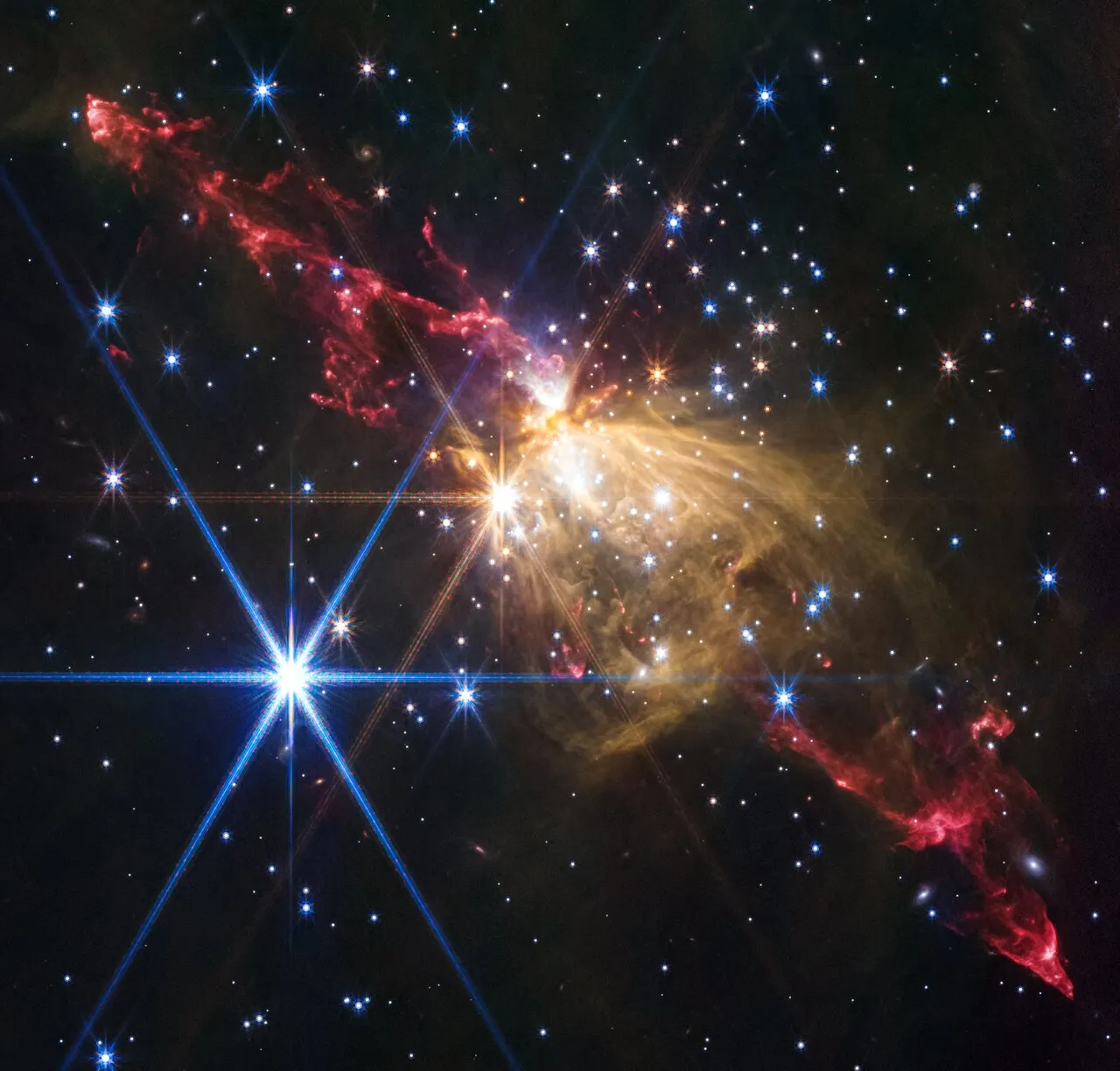
Webb observes immense stellar jet on outskirts of our Milky Way
Way out toward the edge of our Milky Way galaxy, a young star that is still forming is sending out a birth announcement to the Universe in the form of a celebratory looking firework.
astrophysics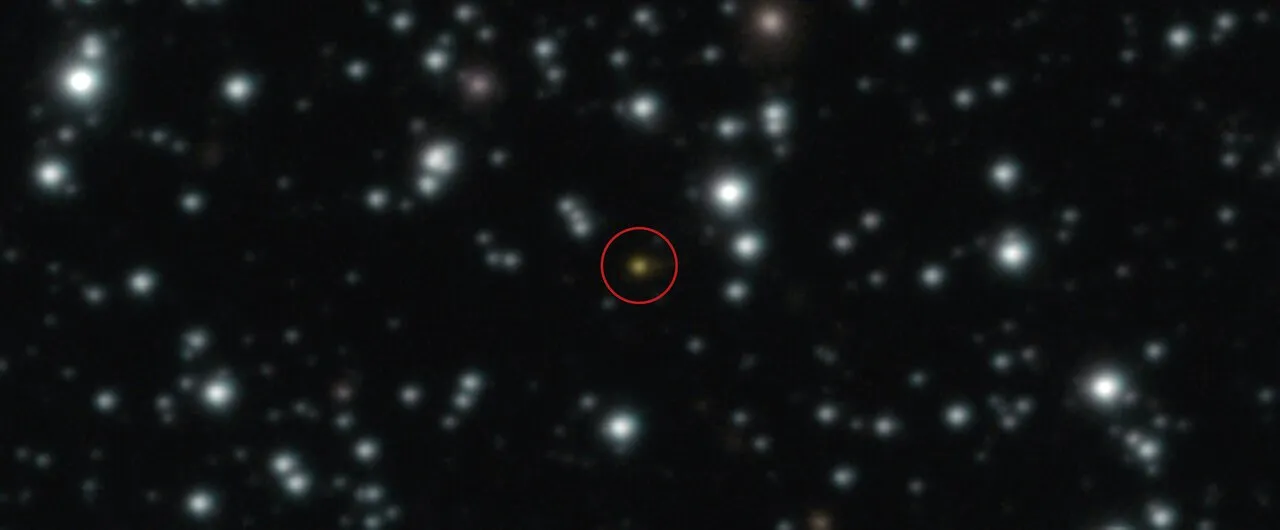
Astronomers spot mysterious gamma-ray explosion, unlike any detected before
Astronomers have detected an explosion of gamma rays that repeated several times over the course of a day, an event unlike anything ever witnessed before.
astrophysicsNeighboring Star’s Warped Ring Shaped by Evolving Planets
Unusual shape of Fomalhaut’s debris ring shows evidence of sculpting by ancient planets, rewriting story of planetary system evolutionThe bright star in the center, Fomalhaut, is surrounded by an ancient debris disk of uneven brightness.
astrophysicsexoplanets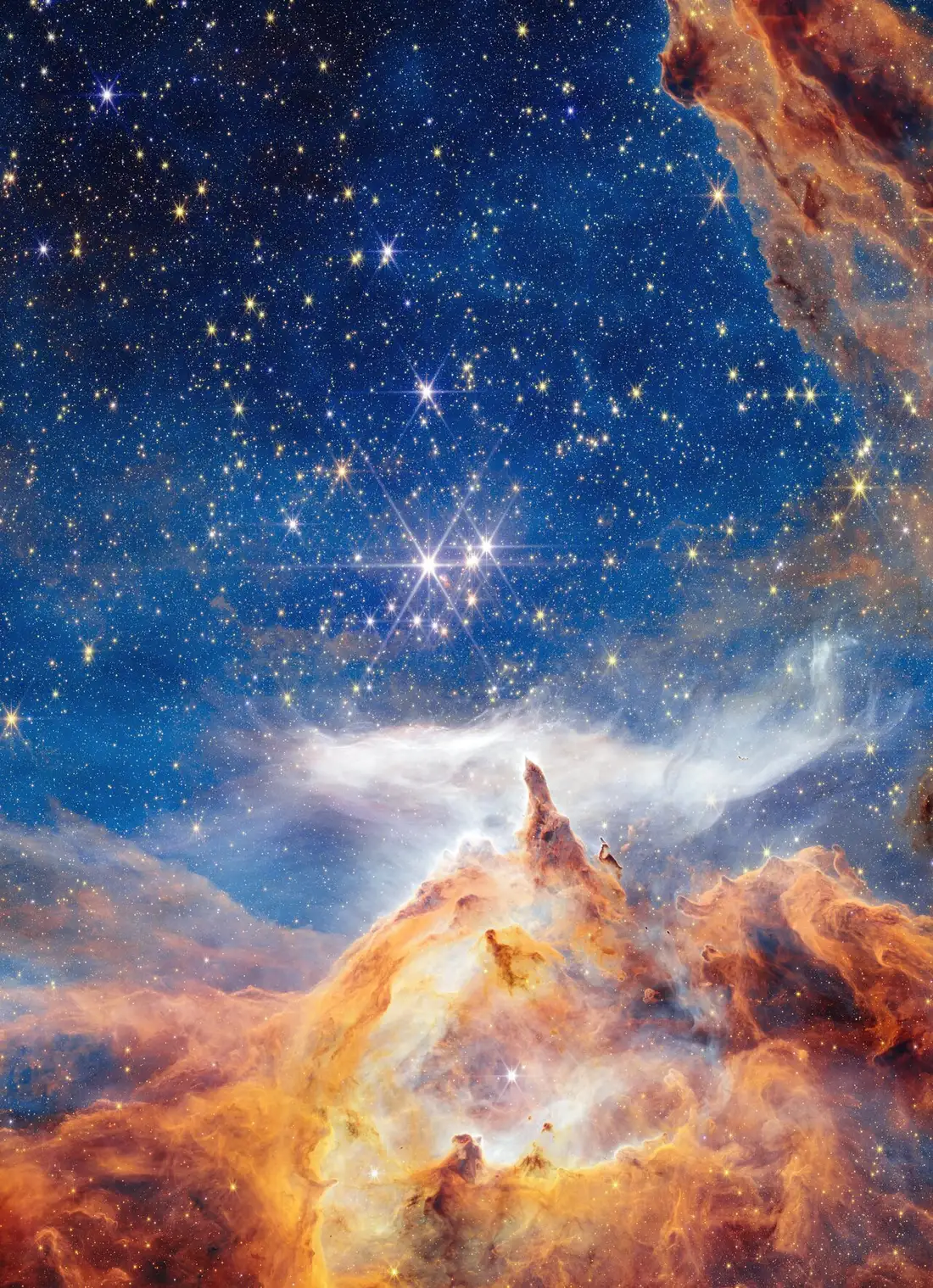
Glittering glimpse of starbirth
This sparkling scene of star birth was captured by the NASA/ESA/CSA James Webb Space Telescope.
astrophysicsstars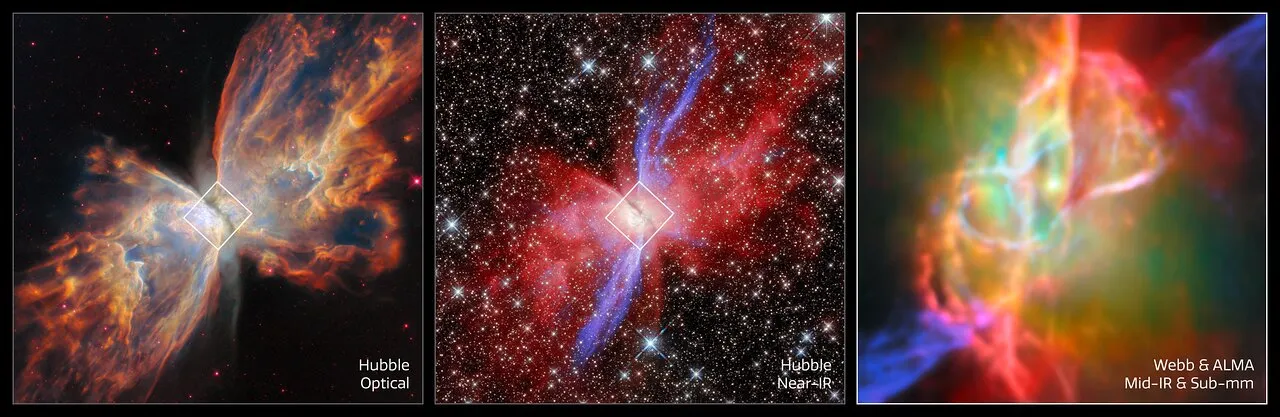
Webb investigates complex heart of a cosmic butterfly
The NASA/ESA/CSA James Webb Space Telescope has revealed new details in the core of the Butterfly Nebula, NGC 6302.
astrophysicsnebulae